

The Bystander Within
Are we born with a moral compass?

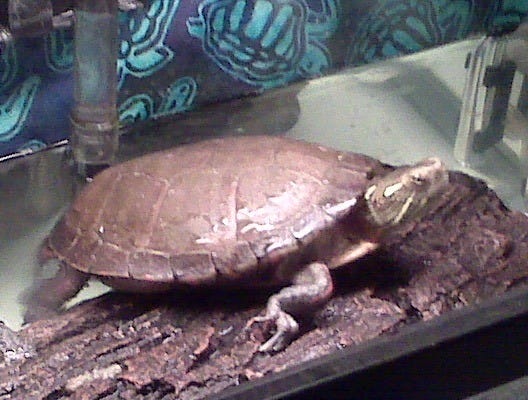
When I was a kid, my family and I were on a long flight when a woman walking down the aisle collapsed and passed out right next to our row. Most of the passengers were asleep so no one really noticed but my dad, a doctor, jumped up to help and cared for her throughout the rest of the flight. In the end she was fine and so grateful that she offered to send us free pet food from Iams, where she worked. We had/have a turtle (Phredd, 34 years old and thriving) and Iams doesn’t do turtle food, but it was a nice offer nonetheless.
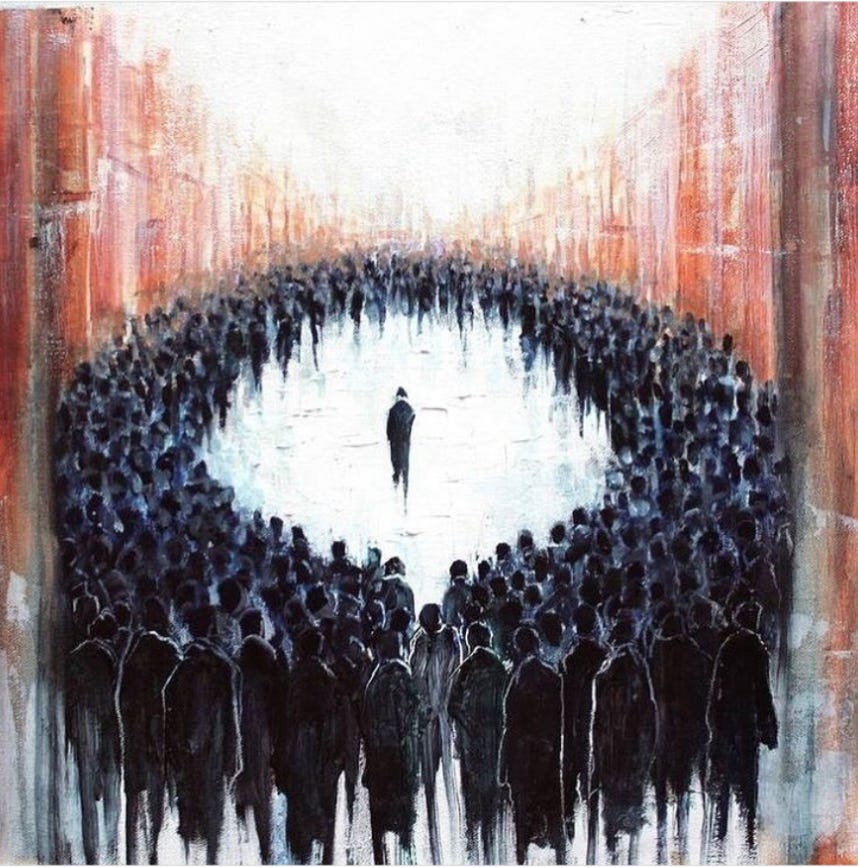
My dad was a hero to that woman but I’d like to think that anyone in that situation would have done the same. Yet the truth is a little more complicated – we think we’ll help in a crisis but often, we don’t. The bystander effect shows clearly that people intervene in these situations far less than they think they will, and the presence of others actually reduces the chances of intervention, presumably because people think someone else will do it.
And yet, it doesn’t necessarily feel like that would be the case.
Every person I’ve ever met or read who has made it their business to travel the world and meet all kinds of people says that they discover the same thing over and over: people, fundamentally and overwhelmingly, are good. That matches my anecdotal experience as well. I’ve worked in media, government, nonprofits and agencies – lived in four major cities, and traveled widely. I’ve met thousands of people and found that the vast majority of them are not only good, but want to make a difference. They want to leave the world a little better than they found it. I genuinely feel morality all around me in everyday life.
How is it that the bystander effect is real, and yet so many of us feel a pull towards goodness?
Are we born with a moral compass?
Researchers turned to puppets to find out. In 2007, a landmark study came out showing that six- and ten-month olds preferred puppets that helped their friends achieve a goal (as depicted in a very simple puppet show) to those that made things worse. Researchers even looked at three-month olds and, using eye tracking as a proxy for preference, found the same thing. That might seem like a stretch, but other types of experiments have come to the same conclusions.
One study found that toddlers (~18 months) spontaneously helped adults, like by picking up something the adult dropped, even when it cost them. One famous video shows a toddler having the time of his life in a ball pit only to be interrupted when he sees a nearby adult drop a pen and struggle to retrieve it. Still, the toddler decides to help, even though it means breaking away from his fun activity, and even though he doesn’t get a reward. Toddlers, it seems, are altruists.
Over many experiments, compelling evidence seems to point towards babies being born with a preference for moral behavior, unincentivized and well before it could be socialized into them. How could that be?
There is no morality gene. But there are predispositions towards certain characteristics that might push you naturally towards more ethical behavior. Studies show that emotional empathy is partially – maybe even close to 50% – genetic. And there’s a neurological component too: seeing someone in distress activates the same neurological response as being in distress yourself (there is a name for when this connection fails to form for others – we call it psychopathy). So despite the absence of a morality gene, we arrive predisposed (some more than others, but still predisposed) to empathize with others. Exactly the kind of emotional habit that might lead you to feel the presence of a moral compass throughout your life.
We might think about it like this: we’re all born with a morality radius – a circle of people who we feel pulled to support, help and empathize with. Not everyone’s radius (ie predispositions) are the same, but we typically start with a wide one. The toddler isn’t particularly discriminating with her altruism.
So the question becomes – what happens as we get older? Does the radius expand or contract?
In short, we start targeting our empathy towards specific people – and away from others.
Babies may be born with some moral instincts, but they’re born with other things too. For example, they love punishment – some toddlers not only preferred the helpful puppets, but chose to whack the unhelpful ones over the head (if you’re a parent, perhaps this resonates).
But they also prefer people who look and talk like them and that can dictate who we direct our empathy towards as our own morality evolves. The toddler in the video helped the adult retrieve her pen without being asked, without considering who the beneficiary was (ie a parent or familiar person) and without a reward dangled in front of them. But by preschool, that starts to change – kids as young as 3-4 years olds start factoring in relationships and reciprocity, narrowing their generosity to those they subconsciously think deserve it. That’s why, in the hypothetical about whether or not you would jump in to save a stranger who was drowning, the ‘stranger’ piece is so important. Doing the right thing for someone we know is an entirely different proposition from doing the right thing for someone we don’t.
In other words, morality can evolve to protect your in-group. Which means that if you are, say, a political leader, and you define your in-group as your donors, your base supporters and your family, then you’re going to direct your empathy towards them, even if it’s at the expense of others. This is, arguably, the biological system at work. But societally, it can be pretty problematic. (And to be clear, biology isn’t the whole picture here – these people are still responsible for their own immorality.)
But that’s the thing with empathy. It can deepen your ties to those most like you, which, if taken too far, becomes a dangerous form of tribalism. Or it can open you up completely.
The radius idea comes from Peter Singer’s moral expansiveness framework, which says that morality starts naturally with those closest to us. But over time, it expands – to different kinds of people, to strangers, to animals and other living things. In his view, it’s not that our morality has to narrow over time, it’s that it can and should accumulate.
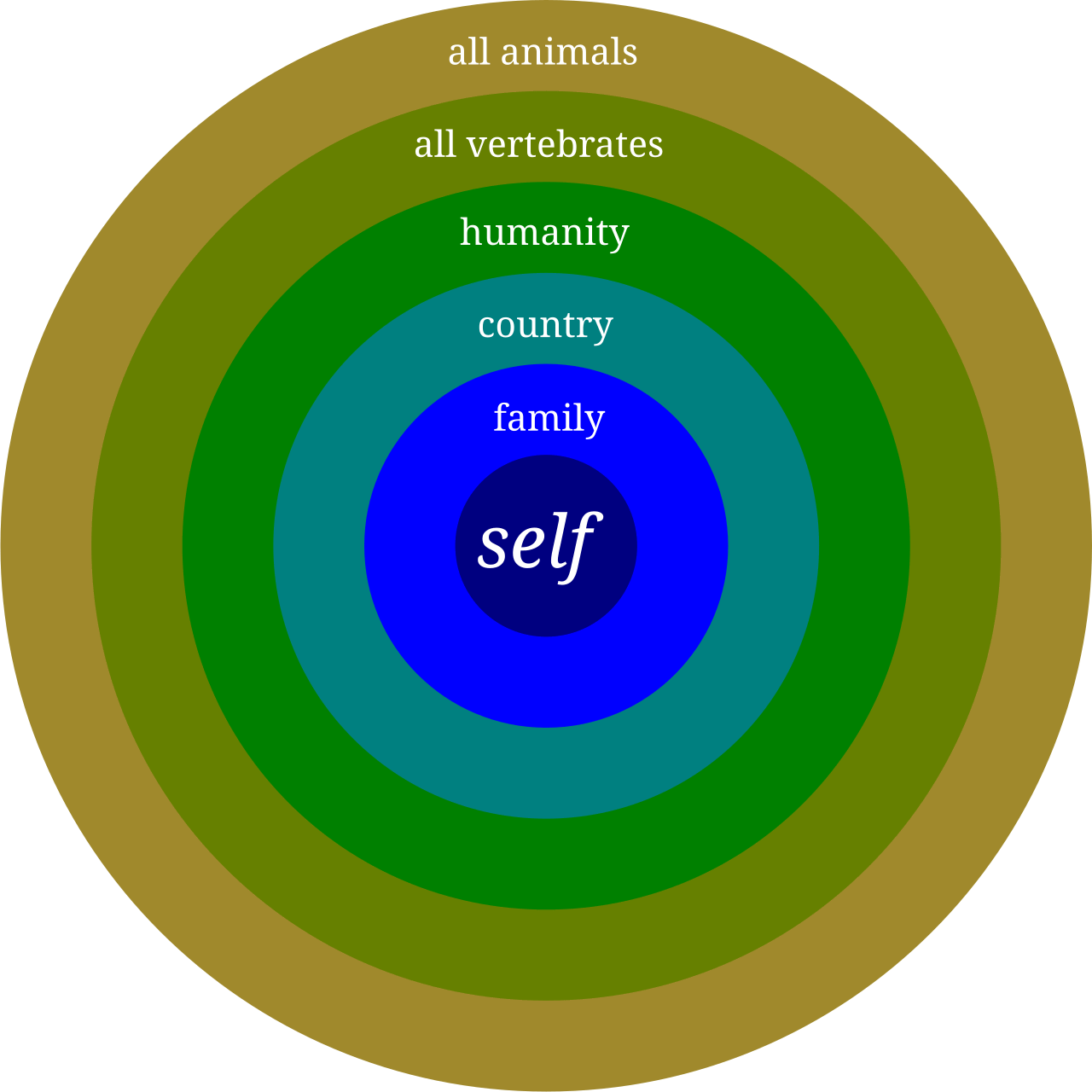
So how do you expand your radius?
It’s not just about spending time with people who are different than you are, it’s about actively embodying their perspective to understand it as much as you can. It’s not necessarily about taking on someone’s pain as your own, it’s about learning to feel compassion for what they’re going through – something motivating enough to act on without draining your own reserves.
These might seem obvious, though they require practice and intention. But there’s a third way to expand your radius that I think is the most interesting. Awe produces what researchers call a ‘small self’ effect – in other words, it shrinks the ego and frees you up to focus your attention on others. In one study, participants who spent 1 minute staring up at eucalyptus trees then helped an experimenter who “accidentally” dropped a bunch of pens more than the participants who spent a minute looking up at a tall building. Weirdly specific, I know, but scientific nonetheless. Experiencing awe can open up your radius.
Which brings me back to my dad. He didn’t jump in to help that woman because he is uniquely heroic. He did it because through a lifetime of caring for patients, internalizing other people’s perspectives, showing compassion and experiencing some awe-some moments in between, he opened his radius of morality.
That’s how you become the bystander who defies the rule.
Super interesting. I've also been puzzled by the discrepancy between my experience of meeting good, kind and generous people all over the world and the commonly held myth of the selfishness of humanity. I've wondered whether we don't reach out to help more because we fear the enormity of need will overwhelm us.
This is a very well-written and interesting article. As someone who has done volunteer work for many years, I often wonder: am I doing this entirely to help another person, or is a small part of it also because it makes me feel good — because it makes me feel like I’ve made a difference?