

Acquired Tastes
Learn to love unfamiliar things

In the fall of 1998, I entered 7th grade and faced a serious choice. Did I want to learn Spanish, French or German? I thought about it for approximately four seconds and chose Spanish, largely because I thought it would be easier and I had a vague notion that it might be more useful than the other two. Thus began eight straight years of continuous Spanish education which got me a smidge further than ‘Hola, como estas?’ but not nearly as far as you might imagine after all that time. It didn’t help that I opted to study abroad in Italy instead of a Spanish speaking country because my love of pizza and desire to say I had lived in Italy (Italy!) far outweighed any yen to become bilingual.
Anyways, like millions of my peer American millennials, I completely miscalculated how much speaking another language might help me in life. So I did the bare minimum to get As in my classes (I didn’t care about Spanish, but I’m still an eldest daughter), while also managing to pick up embarrassingly little of the language I was studying. All to say, I left school having learned no mucho.
Of course, we now understand that the American foreign language education approach is all wrong – we should start kids at 3 not 13, and work on conversation rather than grammar exercises. And as I got older I experienced pangs of regret, like when I ran an immigration reform advocacy organization for ten years and my lack of Spanish felt particularly glaring. But it wasn’t until I moved to a Hispanic neighborhood and enrolled my kids in a Spanish immersion elementary school that I understood the depths of my mistake. As my three year old son corrected my pronunciation on the word ‘tierra’, I decided it was time to restart my studies.
With memories of worksheets and vocabulary flashcards swirling in my brain, I dragged myself to my first zoom session with Ana, a lovely Costa Rican teacher a neighbor had recommended (with all our kids in immersion school, there are many parents frantically trying to brush up on their Spanish while Google translating homework assignments).
Honestly, the beginning was a slog. Like surfing or skiing, languages are so much harder to learn as an adult and the potential embarrassment of trying and failing to get the words and the accent right in conversation is a real barrier. We’re all afraid of being this person. But three times per week, I logged on and (very) slowly, the grind started to feel less like self-imposed punishment and more like taking my brain to the gym. It wasn’t always fun and it was usually pretty hard, but I began to feel great afterwards. And, like the fitness people we all love to hate, I started talking about how good it made me feel constantly (lo siento to my friends and family).
Learning to love the unfamiliar thing
I could write an entire essay about how great learning and knowing another language is. But the skill I’m most proud of developing actually isn’t the language piece – it’s the fact that, as an adult, I learned to like an unfamiliar thing.
This skill is as crucial as it is underrated. One of the most damaging side effects of our technological progress has been the incredible ability we all now have to stay inside of our comfort zone permanently. Do you only want to listen to the music you loved as a teenager? Do you want to read opinions that exclusively mirror your own? Read books similar to the ones you already love? Buy products based on the preferences you’ve already honed? Our technological landscape not only allows this, it enables it automatically. Tech has built a wall around our comfort zones and the longer we stay inside, the harder it becomes to leave. Starting those lessons made me realize that facing the unfamiliar – on purpose – was something I hadn’t forced myself to do in awhile.
We’ve come to dread the unfamiliar like we do the uncertain, a dangerous formula for thriving in the world today.
As usual when it comes to negative versus positive, part of this is biology working against us. In foods, as in most things, we acquire dislikes much more easily than we acquire likes because our brains are wired to identify threats and eliminate them immediately, even if the threat isn’t exactly existential. I have a cousin who tried tofu once years ago and it made her nauseous. Since then, no more tofu for her. But there’s no equivalent positive experience. Think about your kid at the dinner table – one tiny bite of broccoli is enough to make them declare that they hate it. But force them to eat it 10 times and they may shift from hatred to tolerance. Getting them to like it is an exercise in patience and repetition because disliking the unfamiliar is our default (and because kids are extremely stubborn).
Fortunately, learning to like the unfamiliar is a skill that can be cultivated. One way is just to turn it from unfamiliar to familiar. The broccoli example is the mere exposure effect in action, the well documented and widespread phenomenon that shows when people are repeatedly exposed to food, music, places, people or anything else unfamiliar, they often grow to like it simply because it becomes familiar and we love familiar things (for better and worse). This is the same insight behind contact theory, which shows that repeated interactions between different types of people and groups (in-groups and out-groups) increases positive perceptions and reduces negative ones.
But there’s a catch: the mere exposure effect is much more likely to happen if people don’t have a pre-conceived negative notion about whatever it is they’re trying, or whoever it is they’re meeting. Sometimes we have to push past the initial negativity, and acquire the taste.
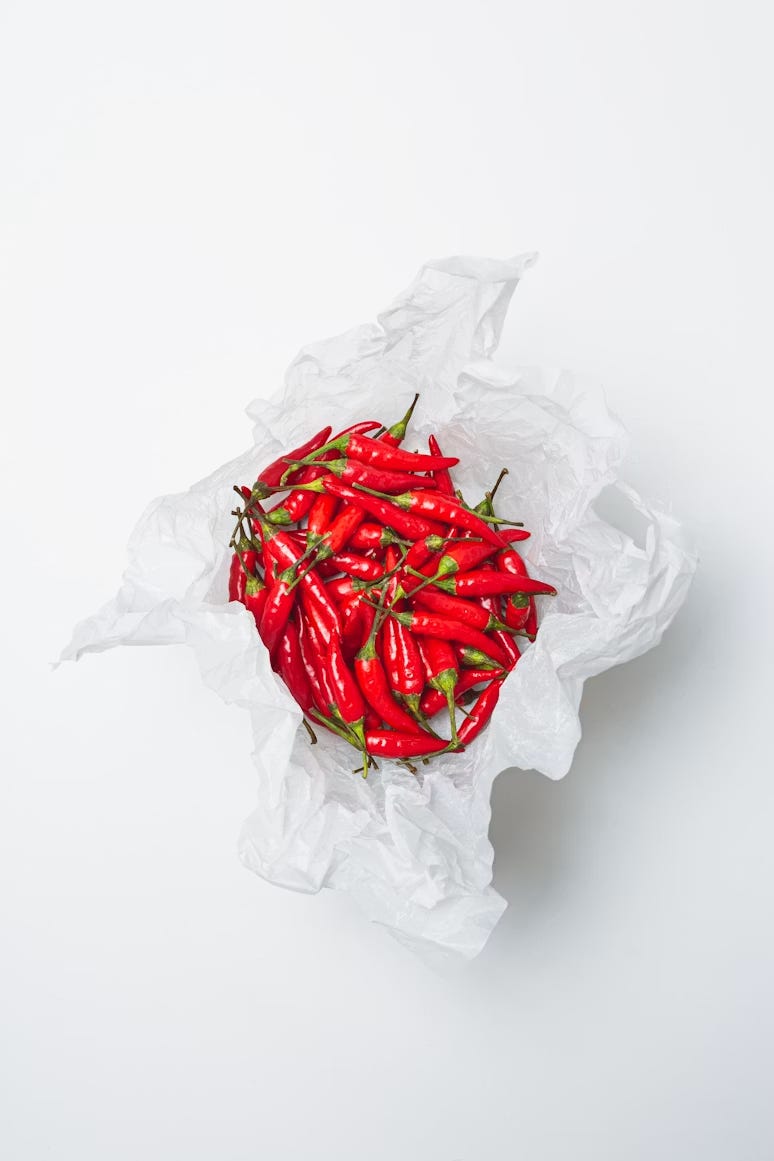
Compared to other animals, humans are actually primed to do that. We have quite a few acquired likes, including for things that we logically shouldn’t. For example, many people acquire a taste for chili peppers, either by learning that the initial pain doesn’t lead to actual harm, thus transforming it into a thrill instead of a threat. Or because we observe people we love and respect – in our families or cultures or in sacred rituals – enjoying the peppers. Kids in particular observe that kind of behavior and eventually acquire the taste themselves. This might explain why most people learn to love coffee despite the fact that it objectively tastes bitter. How many kids watched their mom or dad sip coffee every day while they lovingly made breakfast? That association is one way to acquire a taste.
These effects go beyond just food
Did you know that there is a word for loving and embracing cultures, people and traditions different from your own? It’s called xenophilia and I bet you’ve never heard of it. On the other hand, I’m sure you have heard of its opposite, xenophobia. And that’s part of the problem.
As I mentioned, I used to run an immigration reform advocacy organization. We talked about xenophobia constantly, as you can imagine. There is no shortage of news stories, policy papers and messaging campaigns calling out xenophobia for the problem that it is. But in my decade working on that issue, I never once heard the term xenophilia.
We are fantastic, truly, at forming language for the negative. But we have very little for its inverse. In this case, the thing that we should be striving for – a love of things different from what we know – is a word that most people have never even heard of. And without a shared language, we’re not going to get a shared belief shift, much less one in behavior.
As one writer framed well, there is a difference between tourism and real contact.
Learning to love unfamiliar things is not about trying tapas once in Spain without ever bothering to meet someone from the town you’re staying in. Tourism is fun, it’s easy and there’s nothing wrong with doing it. But it’s not going to deliver the results that real contact will.
Xenophobics aren’t casually hateful – they have an active relationship to their aversion, and they act on it. In my immigration days, we would constantly read polls showing that a majority of Americans were generally in favor of having lots of immigrants here. But the finding was specious because that opinion was real but it was low priority. For the majority in favor, immigration was always their 10th important issue. The minority, though, was a different story. Their aversion had become an ideology, one that they would fight for and cultivate wherever they could. It was so potent that it became the organizing principle for a national political movement, one that nurtured fear with intention.
There was – and is – no comparable counterforce. And whether we’re talking about immigration or simply about our future as a society, we have to develop a passion for learning to love each other with the same ferocity that’s been used to teach us that we hate each other. We have to learn to love the unfamiliar thing, especially if that thing is each other. We need a genuine push to acquire some new tastes.
I am 2+ years into my Spanish lessons with Ana.
I’m not fluent yet, but I’m getting there. Yet it requires more than just showing up to the zooms. I did my son’s parent-teacher conference in Spanish – the teacher’s preference that I could finally honor. I helped my daughter with her math homework (nothing more humbling than attempting 3rd grade math problems in Spanish). I watched the Netflix telenovela El Accidente. Every year, we go to a Spanish speaking country for a week and I force myself to speak it the whole time. I find that even when I can’t find the right word, or my accent sounds horrible, people appreciate it. They see it for what it is: an expression of love for their culture.
Last year, I ran into the mother of one of my son’s friends – a Spanish speaker. We started chatting and she asked about my job; I asked about her family. And somewhere in that conversation, I realized the coolest thing: I can actually connect with this woman. Ten years coasting through Spanish classes, followed by 17 years speaking only English and then two years playing catch up on zoom. A long road for sure, but I can feel that the payoff is just beginning.
What a great piece, Hanna!
Thanks for being so open about your journey and process.
And you're absolutely right: as long as we stay open to learning something new, our horizons will never grow smaller. How cool is that.